

Building the foundations that really matter

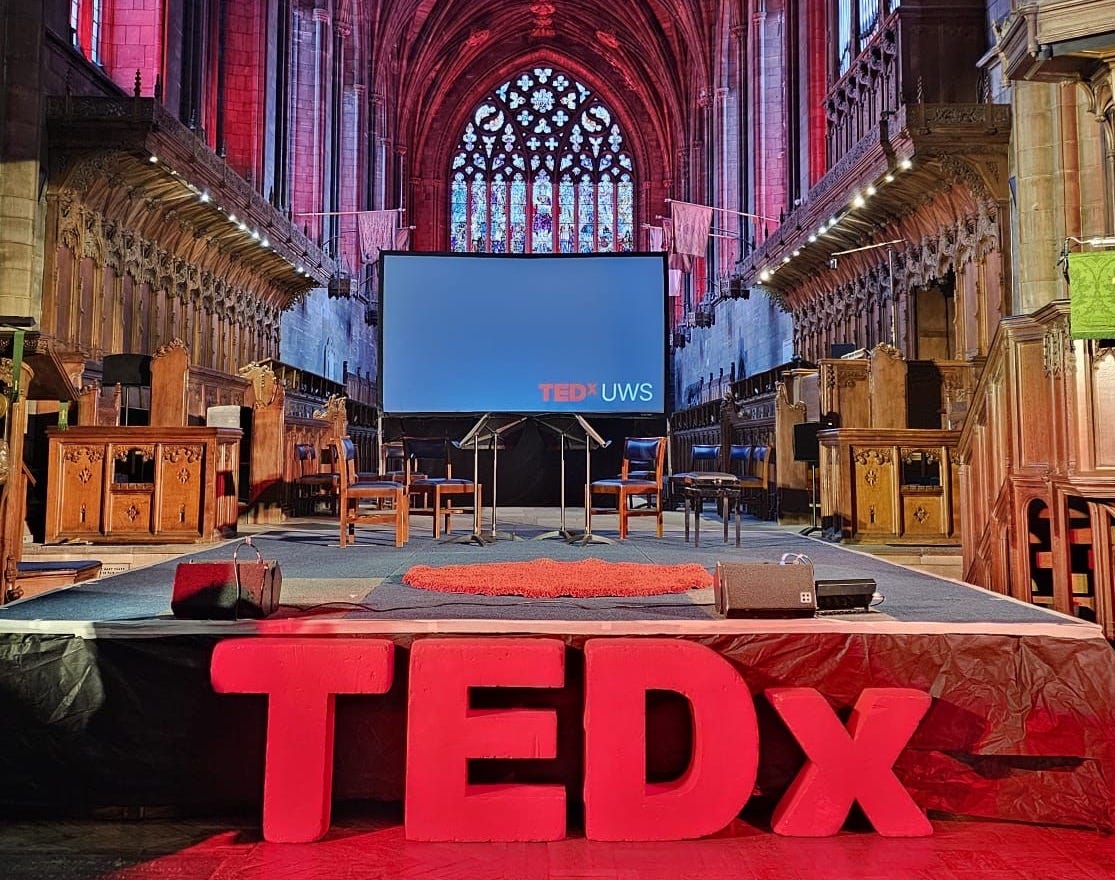
Last weekend, I gave a talk at TEDx in Glasgow about unschooling. I chose to talk about what it looks like when children are given space and agency to direct their own learning and to follow that intuitive knowledge of what is uniquely meaningful and relevant to them and their own lives. And how, if we want our children to become adults with self-knowledge, agency and the ability to navigate their own lives coherently, then our only choice is to lean into trust and partnership. Our role moves away from control and direction and becomes about holding this slippery and ever-evolving space, so our child feels trusted, accompanied, safe and connected as they explore who they are and what it means to be themselves. I didn’t get into deschooling and what hard work it is to unravel our deep conditioning and stories because 18 minutes is not very long.
Mine was the only talk about children. But, as I sat there, in the beautiful but rather chilly Paisley Abbey, it seemed to me that every talk was about children and about deschooling. Weaving through the day was the unspoken theme of vulnerability and everything a child does in order to stay safe. David, a soft and eloquent Irish man who grew up on a tough estate where showing feelings felt dangerous, and his subsequent struggle with drugs, alcohol and violence. Tom, who was bullied at school, and chose to “man up”. Active military service and alcohol wreaked havoc on his life and isolated him from those who desperately wanted to help. Louise, a former primary school teacher who collapsed in her thirties then lived for years with chronic pain. The pain only began to subside when she started to look at her life and the sheer exhaustion that had come from decades of pushing feelings down and pretending she had no needs. It was immensely sad to hear these stories of children doing the best they could at the time, only to find later on how severely disconnected they had become from themselves and consequently from those around them.
Some of the speakers spoke of traumatic childhood experiences. Others told of childhoods that were uneventful, but not necessarily less impactful. Louise talked about how she was an extremely shy child. She changed schools when she was nine years old, and had to go on a school trip. For days before the trip she worried about not having anyone to sit next to on the bus. When the day came, sure enough, no one sat next to her on the bus. She described how devastating that felt and the terrible physical ache of needing to cry but not being able to. She turned her face to the window so no one would see her pushing down the tears. The next day she wrote to her mum to tell her what a great time she was having.
Some showed pictures of the child they felt they had been before they were taught that they needed to hide parts of themselves, or before they layered on all the things they understood were expected of them. Several talked about the long, hard path back from mental and physical pain as a journey back to that child. There were also talks about shame and self-compassion given by seemingly confident people who recounted the cripplingly harsh self-talk that had plagued them since childhood, when they were told they were “naughty” or “too much”, eventually internalising the external until it was themselves saying it.
And so it felt to me like a whole day of courageous deschooling stories.
No one talked about success in terms of academic achievement, wealth or status. In fact, some had done very well in those things but found they were not the keys to life they thought they would be. Connection, self-acceptance, self-knowledge and agency were the foundations that they found themselves painstakingly rebuilding.
What really stood out for me was how hard it is to be a child in a world where you have little agency and you’re just doing the best you can. And how easily adults (often emotionally-disconnected themselves) dismiss the internal worlds of children as inconsequential—sitting alone on the bus, being told you’re naughty, pretending to be tougher than you are. And how what may well look like “resilience” to the adult may be a child learning how to disconnect from pain.
And it also made me think about all the ways that children are shamed and controlled in the name of “learning”. I just read a headline this morning, “More exam stress at 15 linked to higher risk of depression as a young adult”. As if it were not hard enough to be a child.
And yet, when driven by intrinsic motivation and not controlled or wrapped up in all those stressful adult expectations, learning is likely to be joyful and fulfilling. It is no longer yet another place where disconnect is likely to happen in the name of approval or success, but part of the child’s inner journey. The learning itself is an exploration of who they are and of what makes them feel connected.
Learning is innate and it is inevitable, and it expands from these solid foundations—connection, self-acceptance, self-knowledge and agency. My day at Paisley Abbey reminded me that our most important question at the end of the day is really not, “What is my child doing today?”, but “How is my child today?”
Thanks for this and for doing your TEDx talk. I'm always saddened (and mystified) that so many adults realize that their childhood and schooling damaged them in some way and yet they continue to accept that school is an important institution in children's lives.